Brand rivalries have have been around since the beginning of business where each business strategizes to strengthen its brand and market presence, but they can gain credibility thru praising its competitors. This can enhance and even cultivate stronger relationships with consumers thus leading to a more positive attitude towards the brand (Keisha, et.al. 2022).
There are many examples of brand rivalries, for example;
- Mac vs PC
- Playstation vs Xbox
- Nike vs Adidas
- Kellogg’s vs Post
- Apple vs Samsung
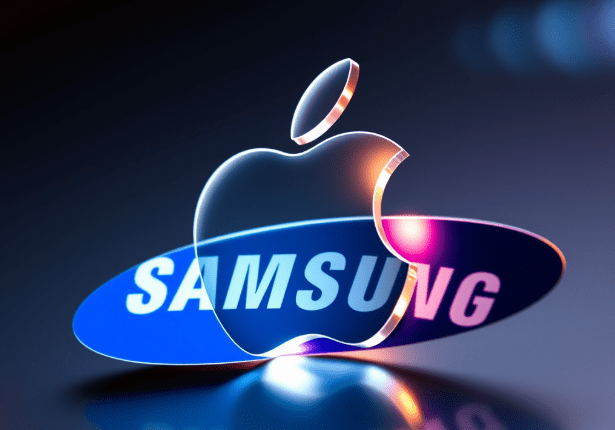
(Swamineth, 2025)
Research of Traditional Rivalry vs Praising Marketing Strategies
Business competition is generally what most companies think of when they advertise and generally want to show their strengths with direct comparisons to their competitors weaknesses. Brand loyalists buy specific brands that align with their values and feel that it signals something about the purchase to other consumers and can lead to advocacy or being a brand advocate or ambassador. This loyalty can bring a sense of community between consumers as they share their experiences to strengthen their brand perception However, research has shown that a new strategy praising a competitor can actually lead to better community building and increased sales, per Harvard Business Review.
It can be advantageous praising competitors to drive a feeling of “warmth” or trustworthiness and this can lead consumers into showing a greater confidence with a sense a of connection to brands that praise their rivals. Rivals that can not only show the contrast between their brands’ strategies that emphasize their distinctions to include comparison and differences, can also show respect for their rivals.
Influence of Consumer Response to Praising a Competitor
During the consumer decision buying process many consumers get decision fatigue while processing all of the information during the evaluation of alternatives phase, because most products have many alternatives and researching and comparing takes time. Time is important to consumers and most prefer honesty most favorably in a brand if they can see that despite a product being different it can praise another while still showing confidence in their own product. Consumers acknowledge this as a strength of “trustworthy” and transparency, thus highlighting its own unique selling points.
When a brand can compare and contrast their product to competitors with their uniqueness to include featured benefits and innovations; it can assist a consumer in their evaluation efficiency process, such as in the thin-slice theory, where consumers must make quick decisions based on a small amount or limited information (Ambady & Rosenthal, 1992) . This brand self evaluation can increase consumer engagement with increased purchase intent through increasing perceived value of product, thus decreasing the consumer cognitive load. This can be vital during automatic processing events when consumers are making automatic or even subconscious decisions using emotions, personability, or even social dynamics intuition. This automatic processing allows consumers efficiency using nonverbal focus and emphasizes can lead social evaluation of intuition versus reflection as more favorable to consumers (Du, 2021) .
When Praising Competitors Might Not Work
- Most of all insincere or inauthentic praise can damage a brand’s reputation if it appears it is only for strategic reasons or in extremely competitive or divided market with few competitors.
- Aa clear differentiation must be made showing a brand’s unique selling points versus competitors, or the consumer may choose the competitors product
- Excessive praise can dilute a brands’ image as insincere with a lack or merit and seen as inauthentic or strategic.
- When a brand image is heavily dependent on exclusivity such as with luxury items that are branded as having superior performance or innovation, or where consumers expect a strong stance such as when it is embedded in a company’s culture ( Swaminathan, 2025).
References
Ambady, N., & Rosenthal, R. (1992). APA PsycNet. Psycnet.apa.org. https://psycnet.apa.org/doiLanding?doi=10.1037%2F0033-2909.111.2.256
Cutright, K. M., Du, K. M., & Zhou, L. (2022, March 24). Research: When Praising the Competition Benefits Your Brand. Harvard Business Review. https://hbr.org/2022/03/research-when-praising-the-competition-benefits-your-brand
Du, K. (2021, November 17). How Brand-to-Brand Praise Influences Consumer Perceptions and Choices. American Marketing Association. https://www.ama.org/2021/11/17/befriending-the-enemy-the-effects-of-observing-brand-to-brand-praise-on-consumer-evaluations-and-choices/
Swaminathan, H. (2025, November 29). Brand Rivalry vs. Competitor Praise: Shaping Consumer Perception. Futurist Findings. https://futuristfindings.com/2025/11/28/brand-rivalry-vs-competitor-praise/
 Site Title